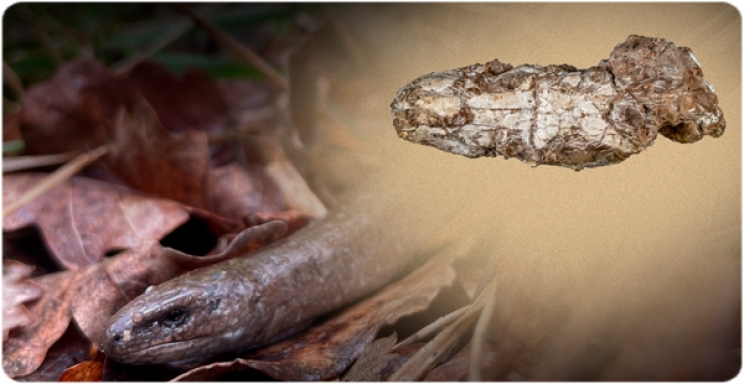

In the humid areas of riparian forests, one often encounters a curious reptile that looks like a snake but isn’t one: the slow worm (Anguis fragilis), a legless lizard that, over the course of its evolution, has lost its limbs—hence the frequent confusion with snakes. It is one of today’s representatives of the anguid lineage, a group of lizards that was far more diverse in Europe in the past. During the Miocene, as temperatures rose, Europe underwent a major faunal transformation marked by the arrival of new reptiles from Asia and Africa.
In this context, the site of Sant Miquel de Toudell, in the municipality of Viladecavalls (Vallès Occidental, Barcelona), has yielded a remarkably well-preserved fossil specimen: a lizard skull more than ten million years old, with its bones still articulated and in the same position they held in life. A detailed study of the fossil—now part of the paleontological collections of the Natural Science Museum of Barcelona—has allowed researchers to describe a new genus and species, named Fontisaurus tarumbaire.
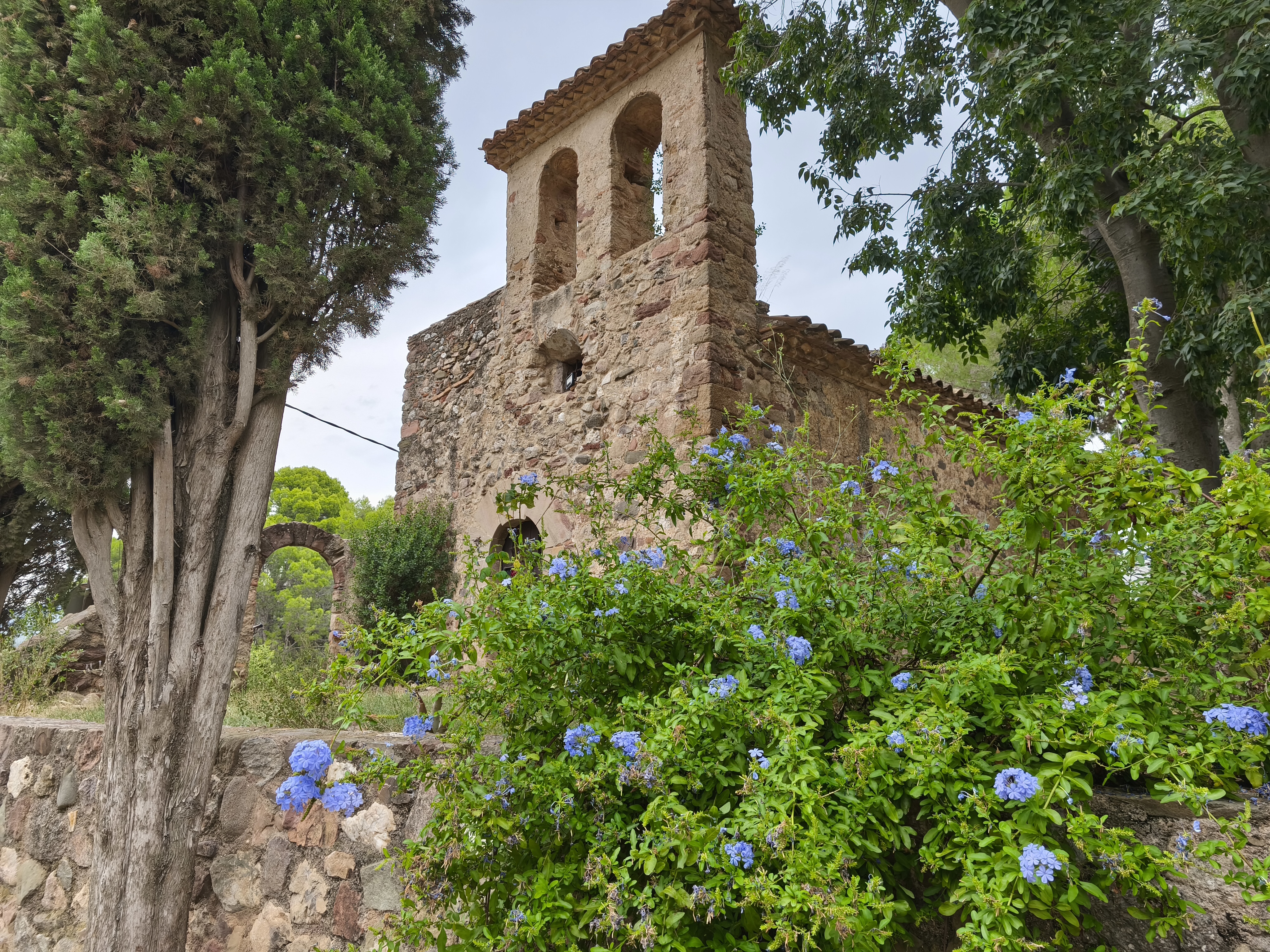 Church of Viladecavalls, near the site where the fossil was discovered in the 1950s. Credit: Frederic Pahisa.
Name with a catch
The genus name, Fontisaurus, pays tribute to a local legend according to which each spring in the municipality is protected by a small dragon. The species epithet tarumbaire references the traditional nickname of Viladecavalls residents. The naming was no coincidence: it resulted from an initiative designed to involve the town and its citizens, organized by the ICP’s Communication and Science Outreach Department, in which participants were able to vote among several proposed names.
“The aim was to acknowledge the territorial connection of this scientific discovery, give a voice to the community, and bring paleontology closer to everyone,” explains Andrea Villa, ICP researcher and lead author of the study.
The study relied on advanced imaging techniques, including neutron tomography carried out in Germany. This method provides a detailed view of the fossil’s interior that cannot be obtained with conventional CT scans. Thanks to it, the team was able to describe cranial features never seen before and to distinguish Fontisaurus tarumbaire from other anguid lizards, both fossil and living.
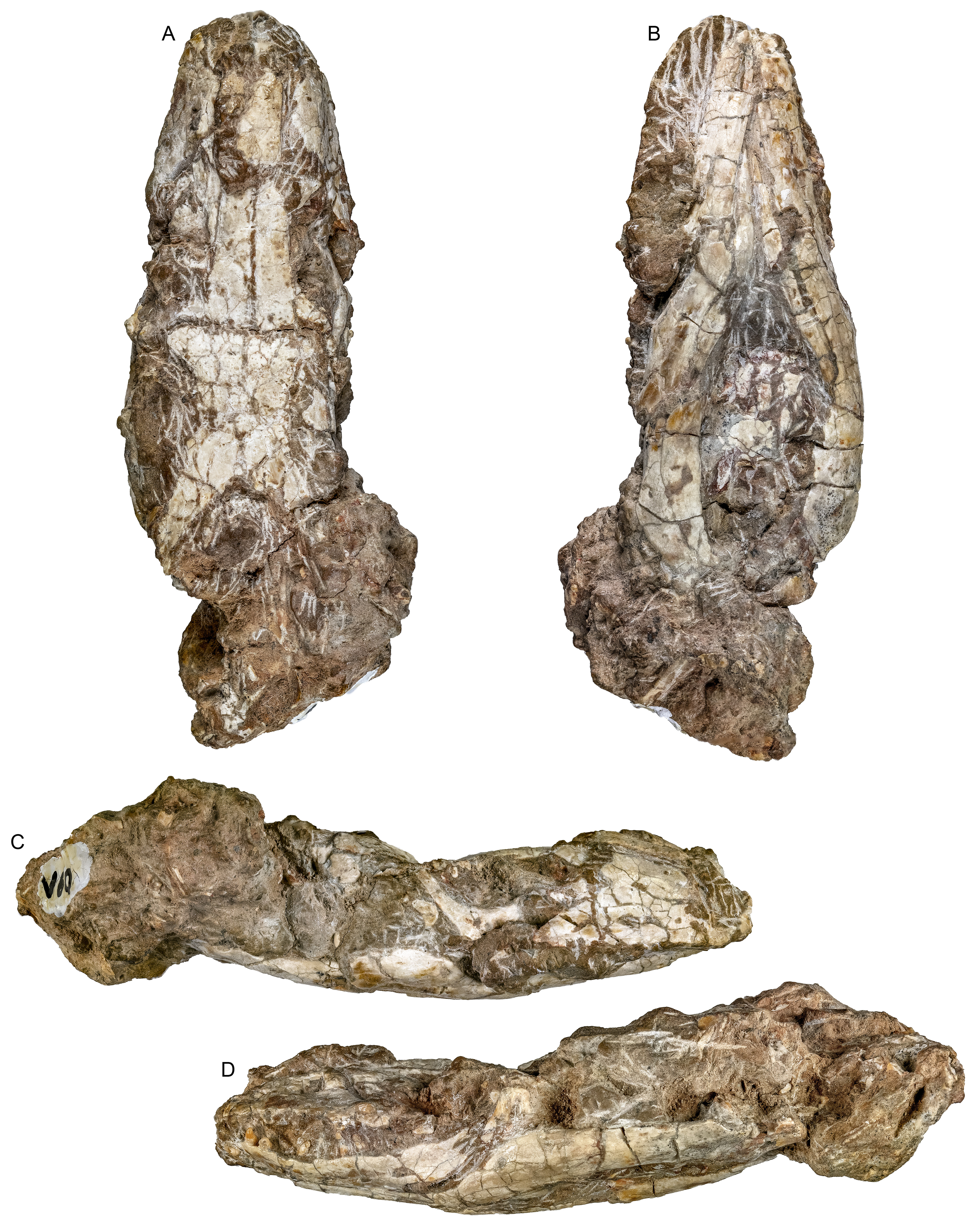 Original fossil skull of the new anguid Fontisaurus tarumbaire, shown from different perspectives (A–D). Credit: Villa et al., 2025.
Initially, its dentition suggested an affiliation with the genus Ophisaurus, but the new data place Fontisaurus on a different evolutionary branch within the Anguidae. This indicates that the diversity of these reptiles in Europe was higher than previously thought.
Acknowledging the Team and Funding
In addition to the ICP team (Andrea Villa, Arnau Bolet, Alejandro Serrano-Martínez, Àngel H. Luján, Massimo Delfino, Josep Fortuny, and David M. Alba), the research also involved Jozef Klembara (Comenius University in Bratislava) and Burkhard Schillinger (Technische Universität München).
The study was funded by projects of the Spanish Ministry of Science and Innovation’s State Research Agency (PID2020-117289GB-I00 and PID2020-117118GB-I00), the CERCA program of the Government of Catalonia, AGAUR, and several postdoctoral and Ramón y Cajal contracts.
Main image: The slow worm (Anguis fragilis), a living anguid that helps scientists understand its extinct relatives. Although it resembles a snake, it is a legless lizard. Credit: ICP.
Original article:
- Villa, A., Bolet, A., Klembara, J., Serrano-Martínez, A., Luján, À. H., Fortuny, J., Delfino, M., Schillinger, B., & Alba, D. M. (2025). A new anguine lizard (Squamata, Anguidae, Anguinae) from the Late Miocene (Vallesian) of the Vallès-Penedès Basin (NE Iberian Peninsula). Swiss Journal of Palaeontology, 144, https://doi.org/10.1186/s13358-025-00411-3