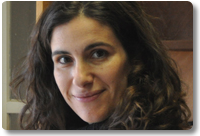
Researcher Virtual Paleontology
Balcarce (Argentina), 1975
Since I was a student I was mystified for how evolution works. I would like to understand how evolution operates to generate / restrict morphological diversity. For me (a palaeontologist's point of view with few or no access to genetic data) that mean to analyse changes in morphology in the light of phylogenetic and functional constrains.
At the end of my degree I became fascinated by xenarthrans, as they are so unique, mostly unknown, strange mammals. In consequence, I did my PhD developing ecomorphological analysis and body mass estimation on mainly Pleistocene gliptodonts and ground sloths. As so many ecological and physiological characteristics correlate with body mass, accurate estimations are very important in palaeontology.
Now I keep working with them, trying to identify patterns of integration in the xenarthran skull with the help of geometric morphometrics methods, with the aim of understand why they had (and have) this huge disparity in comparison with other clades of mammals.
Despite my personal obsession with xenarthrans, I like to collaborate with colleagues working with other vertebrates, always a good occasion to get new points of view, and to learn more about animal diversity and evolution. Those collaboration include to analyse and develop functional analysis on fossil vertebrates with Finite Elements Methods.
E-mail: This email address is being protected from spambots. You need JavaScript enabled to view it.
ICP News
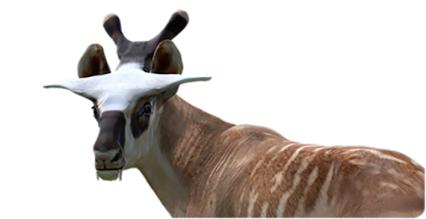
How the Ampelomeryx grew: Discovering the life history of this relative of giraffes that lived in the Penedès
A research team from the Institut Català de Paleontologia Miquel Crusafont (ICP-CERCA) has led the paleohistological study of Ampelomeryx ginsburgi, a giraffomorph ruminant from the Middle Miocene recovered at the Els Casots site (Penedès). Through microscopic analysis of bone tissues,...
The radius of Pliobates and the origin of ape locomotion
A study led by ICP researchers analyzes the morphology of the radius (one of the...
Oriol Monclús-Gonzalo defends his doctoral thesis on the locomotor evolution of primates

Oriol Monclús-Gonzalo, researcher at the Institut Català de Paleontologia Miquel Crusafont (ICP), has defended his doctoral...
Mini-pig with a big story: A Dog-Sized Pig roamed Ancient Kenya

The extinct pig Cainochoerus inhabited eastern Africa during the late Miocene, around 6 million years...
The Groundhog Day of millions of years ago: Reconstructing climate using fossil rodents
Small mammals are closely linked to climate, and their fossils allow scientists to reconstruct past...